The works
Seawater in at 3.5. Salt out at 27.
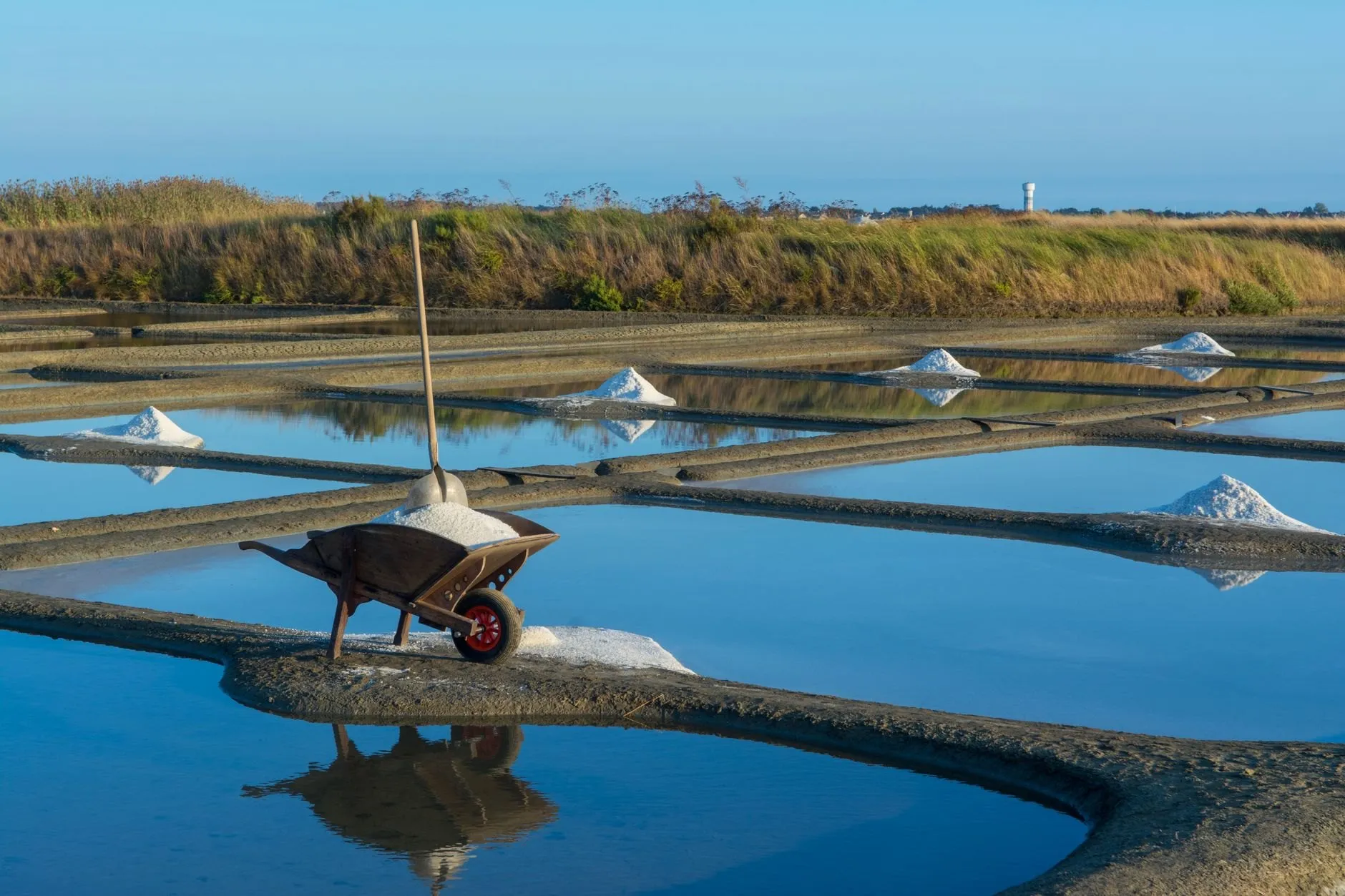
Lowfield is 26 hectares of shallow pans behind the seawall. Brine moves through them by gravity alone, gets heavier every day the sun is out, and gives up its salt in the last six. Here is how, and who does it.
A marsh that made salt before
The pans at Lowfield were first cut in the eighteenth century and worked until 1910, when cheap mined salt from Cheshire put every saltworks on this coast out of business. For a century they were grazing marsh with the banks just showing through the grass.
We re-cut them in 2011: nine pans, one sluice in the seawall and a row of wooden weirs, laid out almost exactly on the old lines. There is no pump and no heater anywhere on the works. The spring tides fill it, and the sun and the North Sea wind do the rest.
A good summer gives us about 311 tonnes. A wet one gives less, and we would rather sell out than buy in.

Pan by pan
Where each mineral falls out
Every mineral in seawater gives up at its own density, measured in degrees Baumé. Each pan exists to take one of them out before the next is allowed to fall.
| Pan | °Bé in → out | Area | Depth | What falls out |
|---|---|---|---|---|
| Reservoir | 3.5 | 9,400 m² | 1.8 m | Nothing — it is the store |
| Condensers 1 and 2 | 3.5 → 7.0 | 61,000 m² | 40–28 cm | Silt, then calcium carbonate |
| Pans 3 and 4 | 7.0 → 16.0 | 22,000 m² | 25 cm | Gypsum, in clear needles |
| Pan 5 | 16.0 → 25.7 | 7,800 m² | 22 cm | The last gypsum; the pan turns pink |
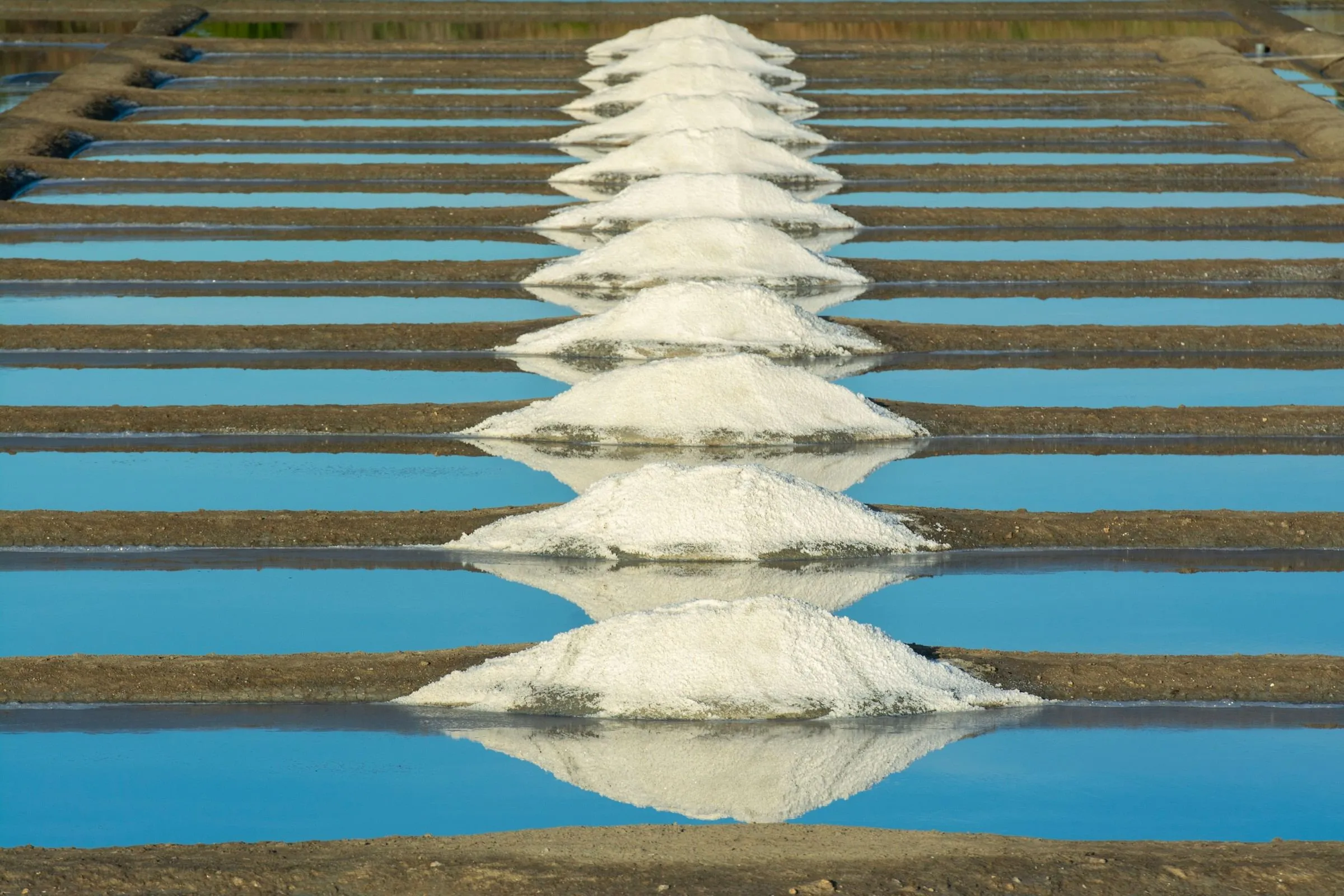
| Crystallisers 6a–6f | 25.7 → 27.0 | 4,200 m² | 20 cm | Sodium chloride — the salt |
61,000 m² of condensers against 4,200 m² of crystallisers. That ratio is what evaporation requires to put 39 tonnes of seawater through the works for every tonne of salt that leaves it.
What happens when
The season runs from late April to September. In October the pans are drained, the floors scraped and the banks re-puddled with clay.
-
April
Flood
The sluice opens on a spring tide and the reservoir and condensers fill with seawater at 3.5 °Bé.
-
May–June
Concentrate
Brine walks from pan to pan by weir. Sun and wind take the water; the minerals we don’t want settle out on the way.
-
July
Crystallise
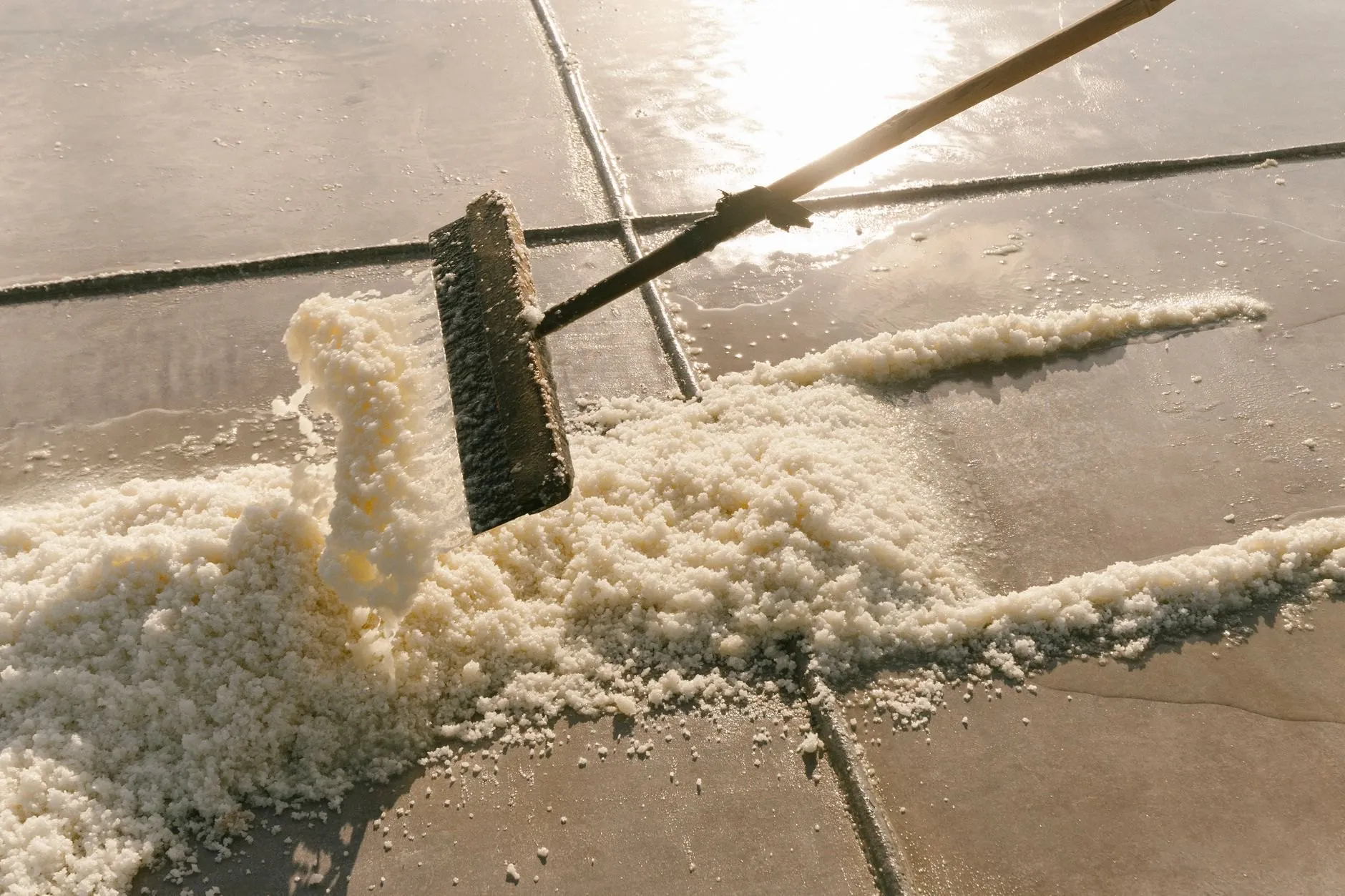
At saturation it reaches the six crystallisers. On a still morning the flakes form on the surface and are skimmed by hand.
-
July–Sept
Rake
The coarse salt that falls to the floor is raked into ridges, left to drain overnight and barrowed to the mound.
-
All year
Rest and pack
A season under cover dries it in the wind. Then it is screened, weighed and packed at the works.

What is in it
Analysis of last year's harvest, one composite sample per grade. The magnesium is why fleur de sel tastes softer, and why it stays damp.
| Measured | Fleur de sel | Flakes | Coarse |
|---|---|---|---|
| Sodium chloride, dry basis | 96.1% | 97.4% | 98.2% |
| Magnesium | 0.42% | 0.31% | 0.19% |
| Calcium | 0.14% | 0.16% | 0.21% |
| Moisture as packed | 4.8% | 2.6% | 1.9% |

Who works it
4 people and a hydrometer
- Salt master
- Reads the hydrometer at 07:00 every morning and decides which boards lift. Has run the works since the first season.
- Two rakers
- Skim the flakes at first light, rake the crystallisers through the day and barrow the harvest to the mound.
- The packing room
- Screens, weighs, packs and posts every order, and answers the phone when the sluice house is out on the banks.
See it for yourself on a pan walk
Thursdays at 14:00 from May to September, £8 a head. Or taste the harvest at home.