Recipes and notes · Notes from the marsh · 5 min read
Why the pans turn pink in August
Every summer someone rings to ask if the marsh is polluted. It is the opposite — a pink pan is the surest sign the salt is nearly ready.
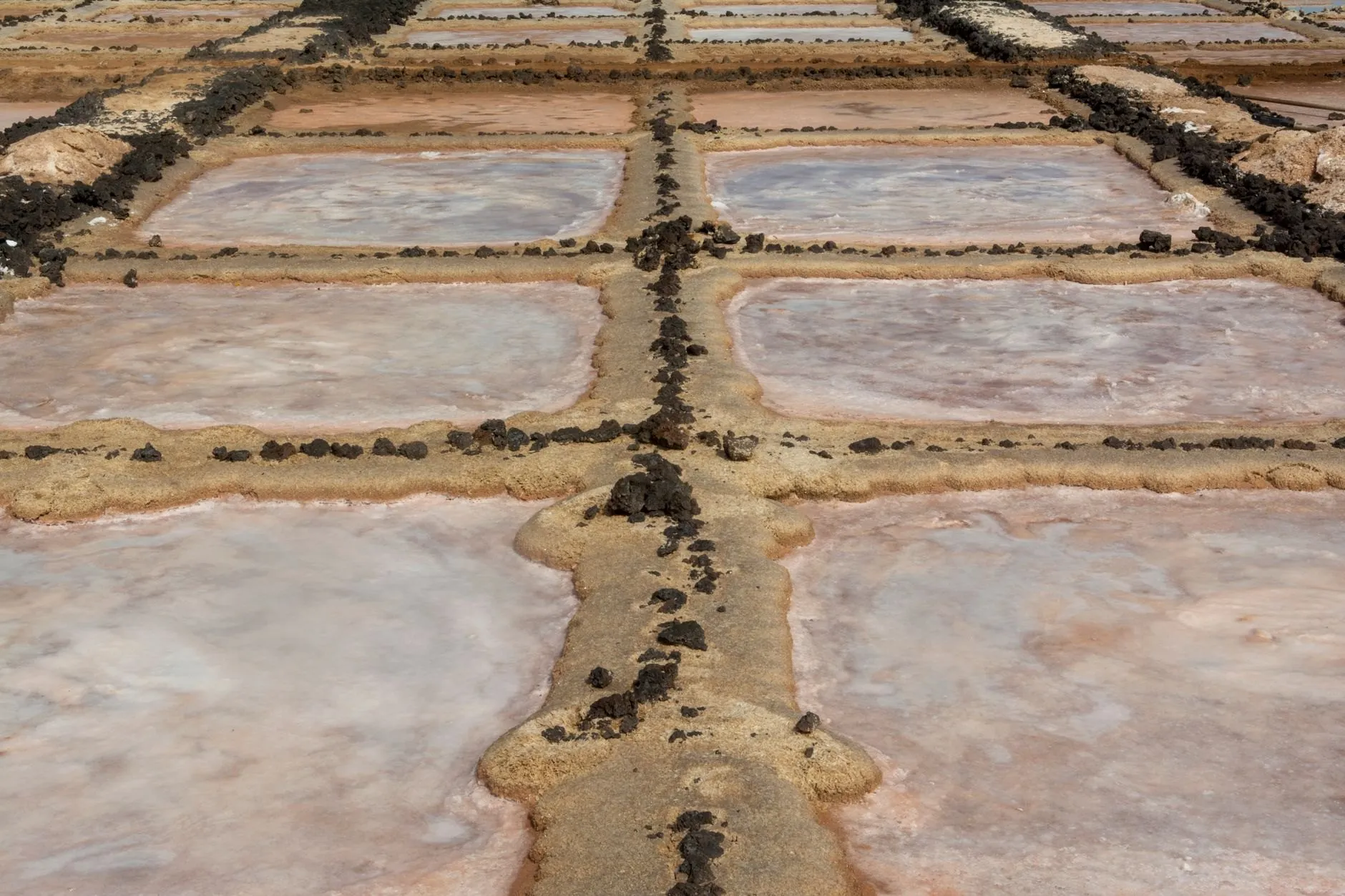
Every August someone driving along the sea road stops, looks across the marsh and rings the sluice house to ask whether something has gone wrong. The last two pans before the crystallisers have turned pink.
Nothing has gone wrong. It is the best news we get all summer.
Salt-loving algae
Seawater comes into the works at about 3.5 degrees Baumé, a measure of how heavy the water is with salt. As it walks from pan to pan and the sun takes the water, it gets saltier. By the time it reaches about 22 °Bé, almost nothing can live in it.
Almost. A single-celled alga and a family of salt-loving microbes thrive at exactly that salinity, and they protect themselves from the sun with the same orange-red pigment that colours carrots and flamingos. When they bloom, the whole pan turns pink, then salmon, then brick red.
A reading you can see from the road
For us it is the most useful instrument on the works. A pink pan means the brine is close to saturation — 25.7 °Bé — and that within a week or two it can be let through to the crystallisers, where the salt starts to fall.
Does it colour the salt?
No. The pigment stays in the liquid and drains away with the bitter mother liquor when the pans are raked. The salt that comes off the floor is white. If you visit on a pan walk in August you can see both side by side.