Grades · four solids and one liquid
Four grades leave the works, and they are the same salt
Nothing here is blended, washed with anything but its own brine, iodised, anti-caked or dried with heat. The difference between the grades is where in the crystalliser the crystal formed and on which morning it was lifted — the surface, the bed, or the mill.
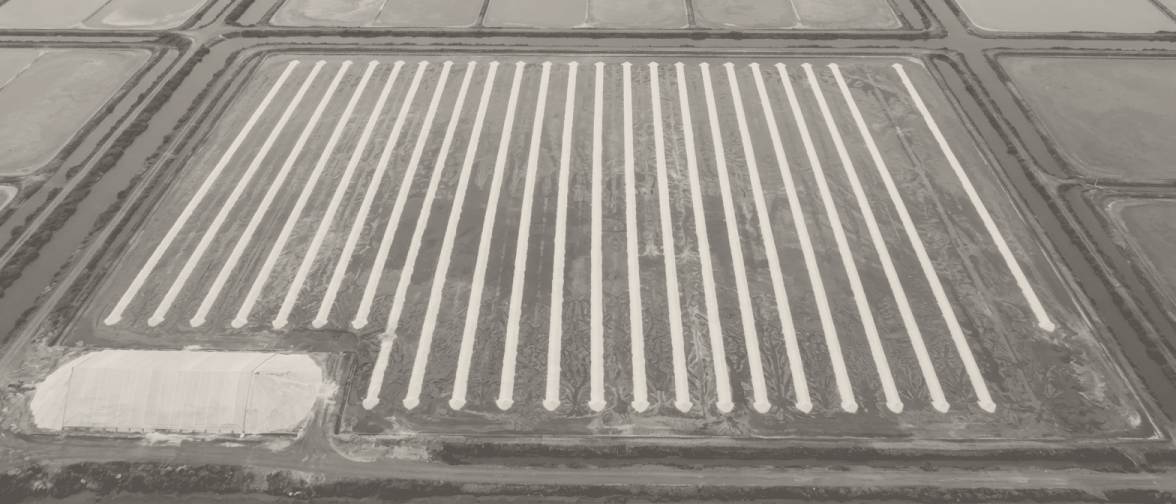
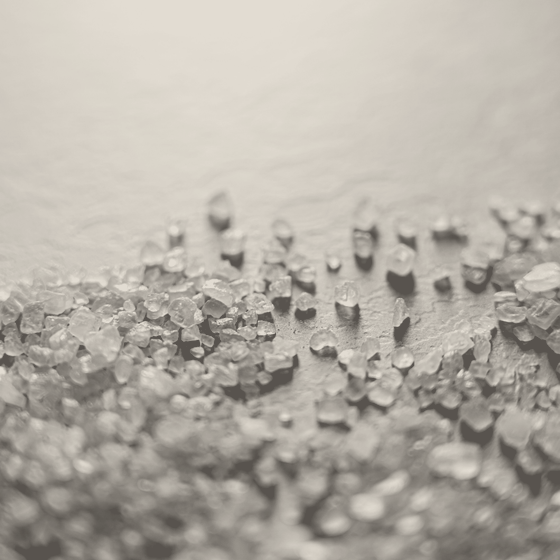
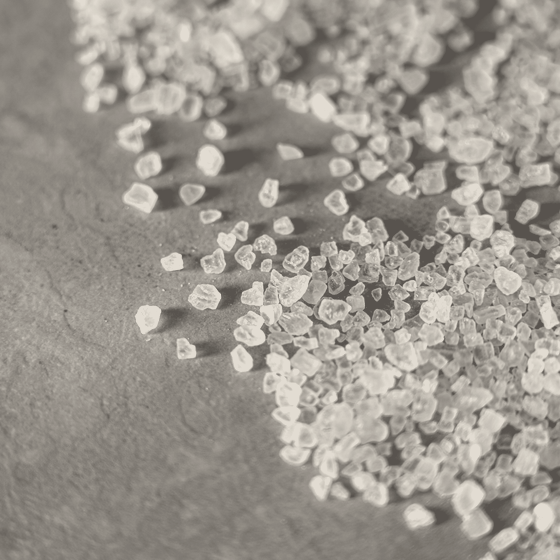
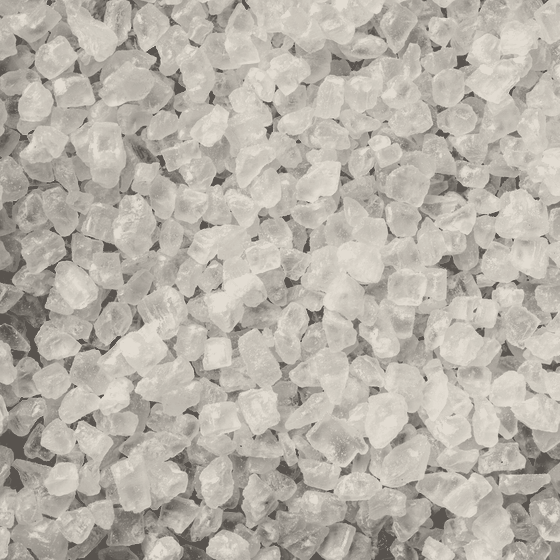
| Grade | Taken at | Crystal | What it is for | Last season | Price |
|---|---|---|---|---|---|
| Fleur de sel | 26.4 °Bé, skimmed off the surface of 6c and 6d | thin plates, 0.4—1.2 mm, damp | put on at the table, never in the pan — it dissolves before it can season anything hot | 1.8 t | £11 / 125 g |
| Flake | 27.0 °Bé, the skin, lifted before the rake goes in | hollow pyramids that crush between finger and thumb | finishing meat and bread; the one grade worth pinching rather than measuring | 22 t | £9 / 500 g |
| Coarse | 27.0 °Bé, raked off the bed of 6a—6f | cubes, 1—3 mm | pasta water, brines, curing, the mill; the working salt of the works | 247 t | £6 / kg |
| Washed fine | milled from coarse, screened at the mound | under 0.5 mm, free-running | baking and anywhere a weight has to be repeatable | 41 t | £5 / kg |
| Bittern | 29.5 °Bé, drawn off pan 6 at the sweep | liquor, not a solid | a tofu coagulant; the rest goes on the hay fields | 8,900 L | £5 / 250 ml |
What the analysis says
| Measured | Fleur de sel | Flake | Coarse |
|---|---|---|---|
| Sodium chloride, dry basis | 96.1% | 97.4% | 98.2% |
| Magnesium, as Mg | 0.42% | 0.31% | 0.19% |
| Calcium, as Ca | 0.14% | 0.16% | 0.21% |
| Moisture as packed | 4.8% | 2.6% | 1.9% |
| Bulk density | 0.79 kg/L | 0.54 kg/L | 1.18 kg/L |
Analysis of the 2025 harvest, one composite sample per grade, taken after a season under cover. The magnesium is what makes fleur de sel taste less flatly salty than the coarse, and it is also why it stays damp.
How it is packed
Fleur de sel and flake go into 125 g and 500 g tubs. Coarse and washed fine go into 1 kg bags, 5 kg pails and 25 kg sacks. Bittern goes into 250 ml bottles and, for tofu makers, 20 L drums. Salt keeps indefinitely if it is kept dry; the damp grades are meant to be damp and should not be dried out.
Everything is screened after a season under cover at the mound, which is why the salt sold this year came off the floor last year.
Wholesale from 25 kg, and pan walks on Thursdays — how to order.
Order salt